
‘Redbill is a clever device that charts a course through 100 years of Australia's economic, political and social development and, in so doing, describes who we are and why we are.’
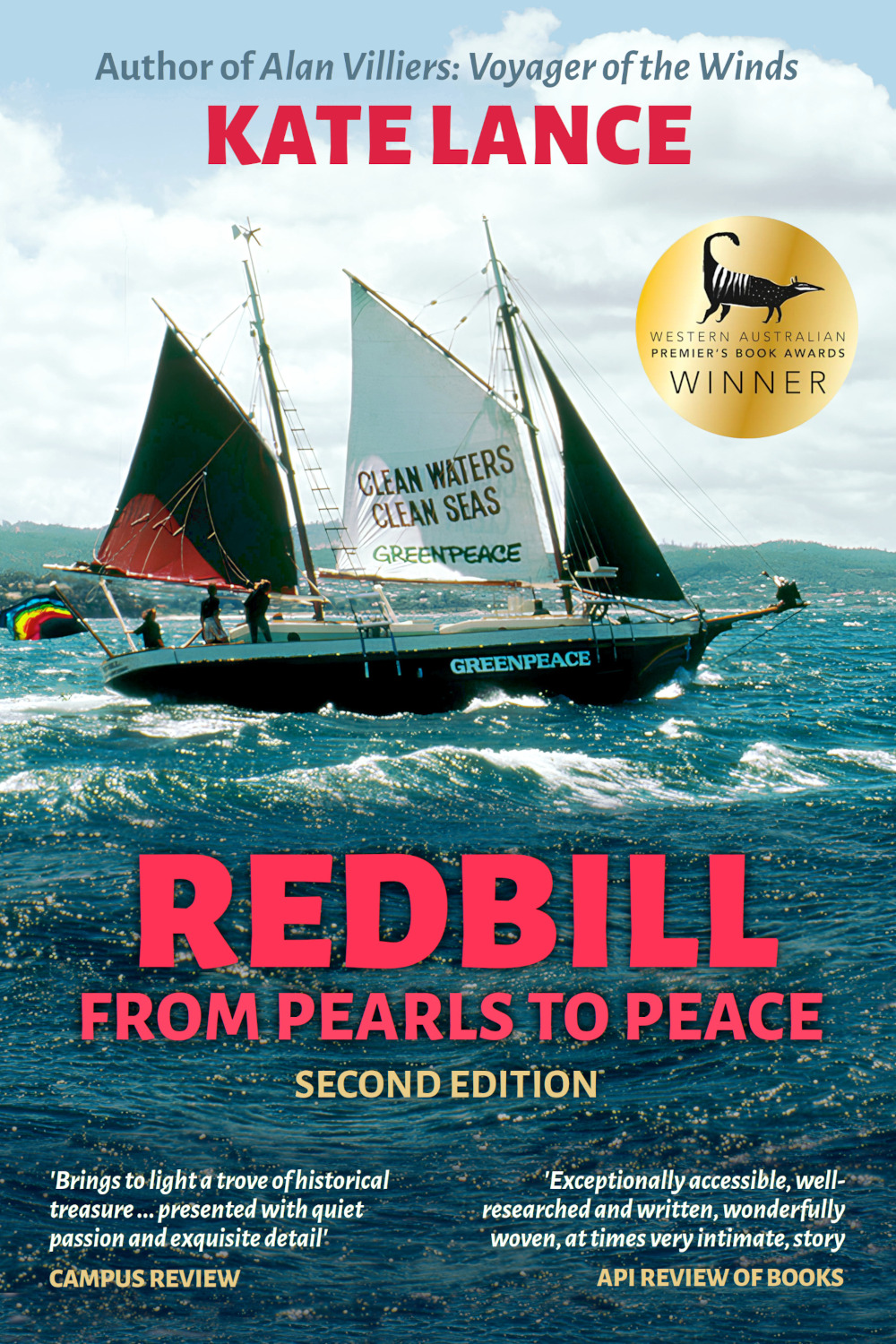
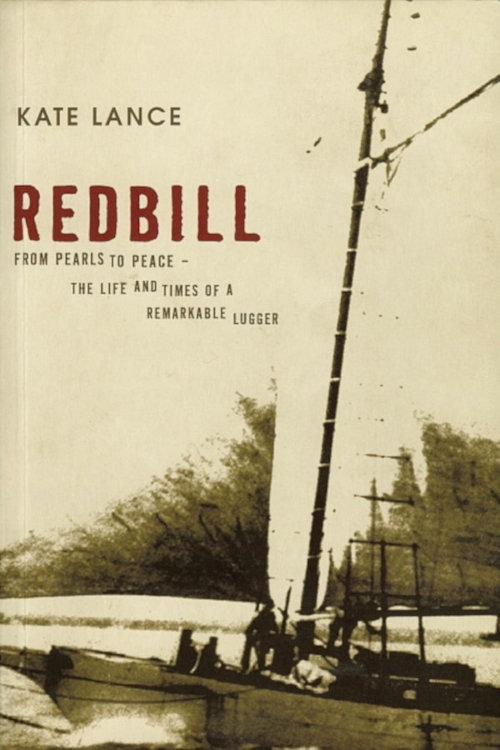
REDBILL: From Pearls to Peace
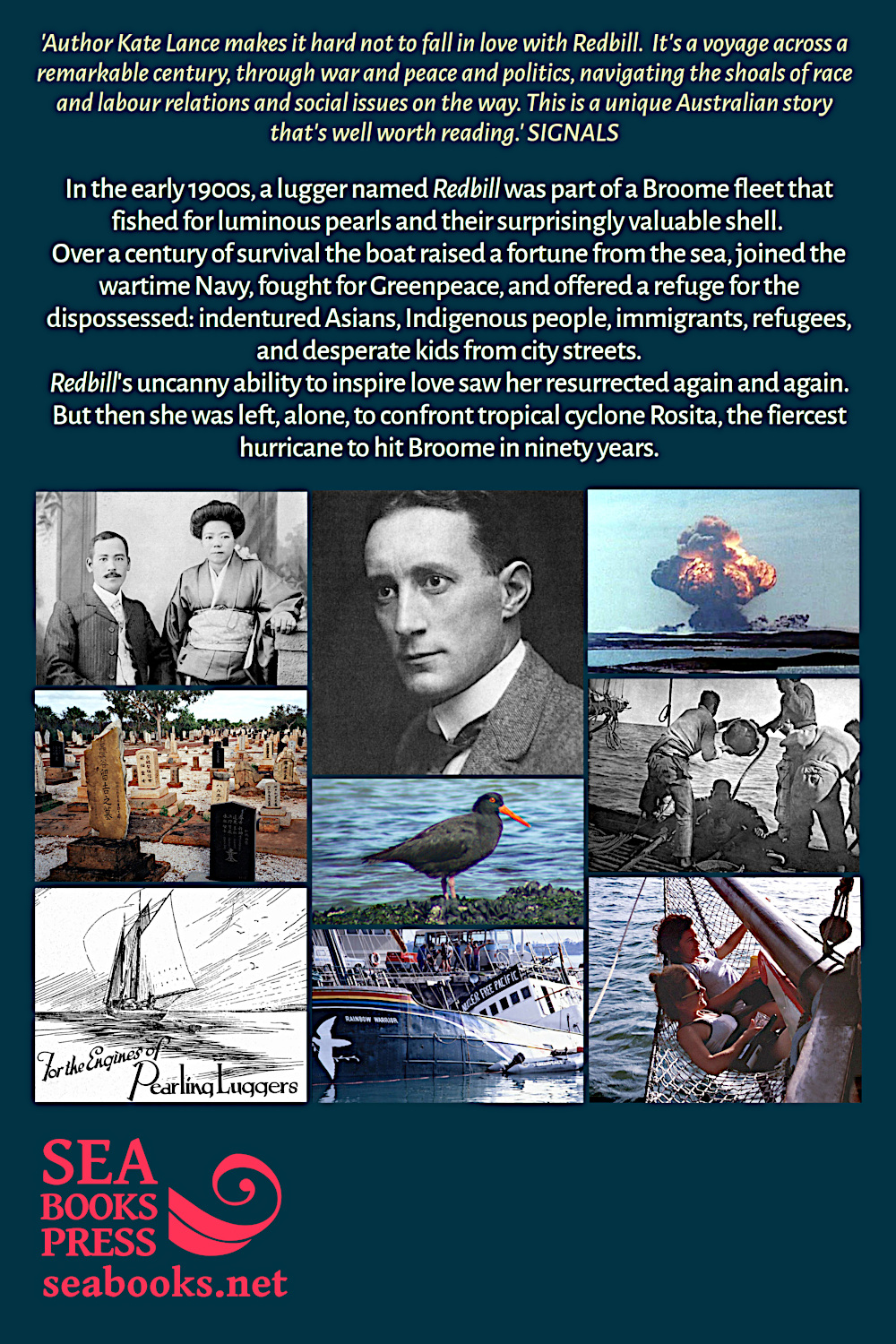
SECOND EDITION 2026, fully revised and updated, now with nearly 160 images.Redbill is the true story of a sailing boat's voyage through a century of Australian history. The lugger was owned by the buccaneering pearling master Captain Gregory then, as naval vessel HMAS Redbill, she was bombed in the Pacific War by the Japanese.
She worked for Greenpeace, raised funds for East Timor refugees, and reunited a young Aboriginal man with his family. Finally Redbill took on an epic voyage around Australia, to return to the North-West and face her greatest challenge yet: Rosita, the most powerful tropical cyclone to hit Broome in ninety years.
First Edition of Redbill
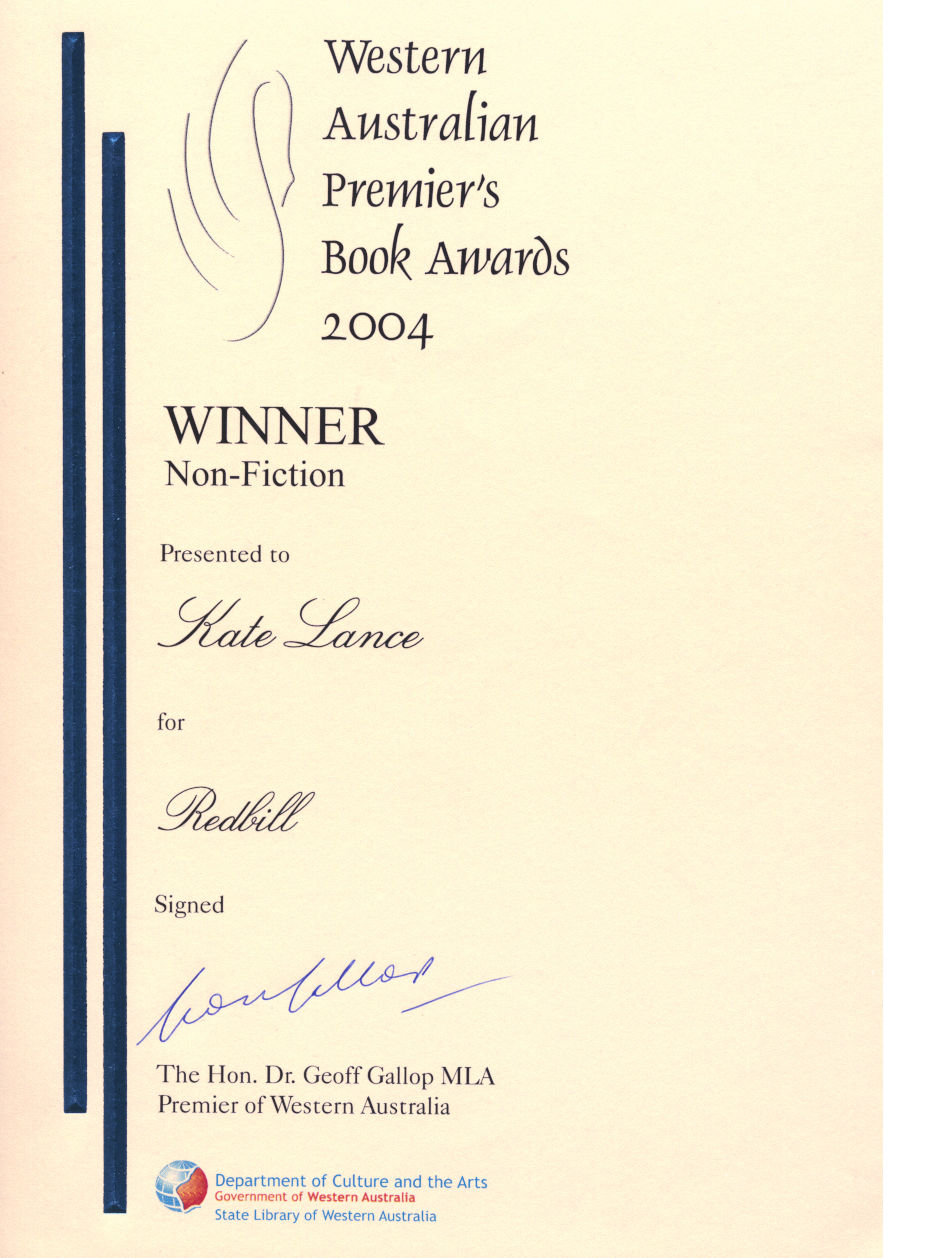
Redbill: From Pearls to Peace was first published in 2004 by the Fremantle Arts Centre Press (now Fremantle Press). On 20 May 2005 Redbill won the Western Australian Premier's Book Award for Non-Fiction. The judges' comments:
Built in 1903 for the Broome pearling industry, Redbill
went on to an eventful life that spanned nearly a century and some major
historical events. It was requisitioned by the navy during World War II,
took part in Greenpeace protests in the Pacific, and was used to raise
funds for the East Timorese. At various times it was crewed by troubled
teenagers, crocodile farmers, ecologists and others who all fell under
its spell. One of those captivated was Lance, who chronicles with warmth
and affection its remarkable adventures.
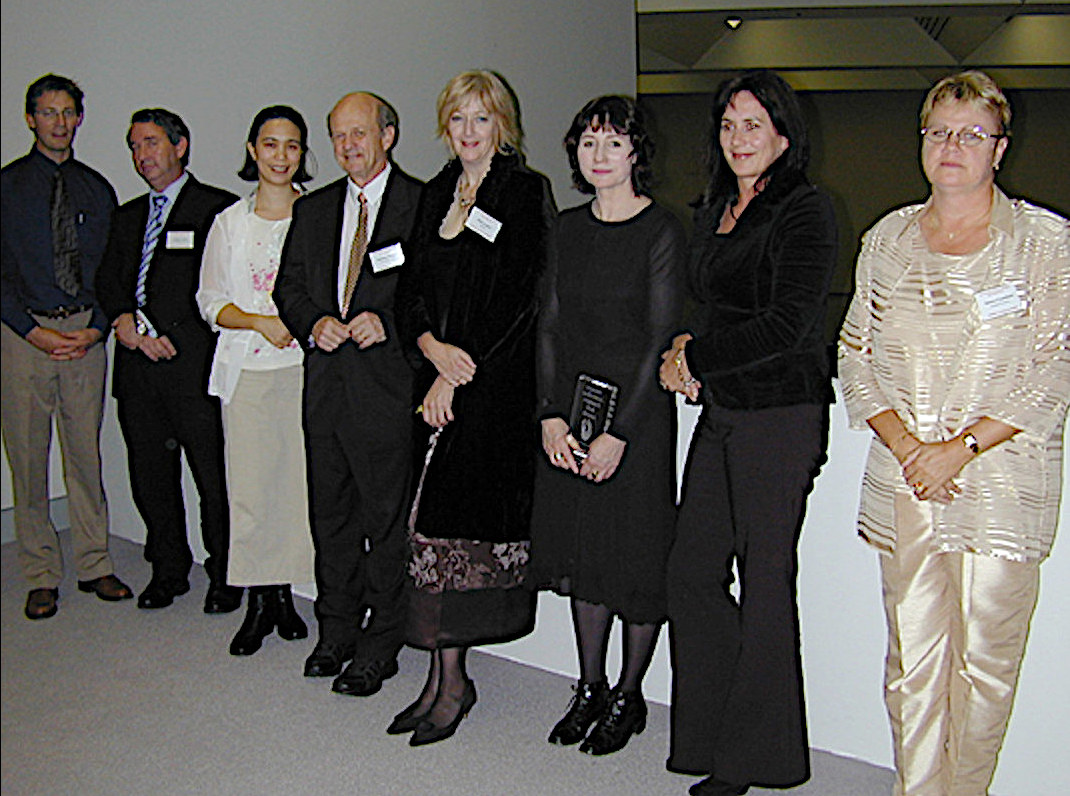
WA Premier's Book Awards, 20 May 2005. L-R: Anthony Eaton, Fireshadow, Young Adults. Greg Craven, Conversations with the Constitution, Non-Fiction. Miriam Wei Wei Lo, Against Certain Capture, Poetry. Anthony Barker, Behind the Play, WA History. Kate Lance, Redbill, Non-Fiction. Gail Jones, Sixty Lights, Fiction & Overall Winner. Jolly Read, Yandy, Script. Joanne Crawford, A Home for Bilby (Illust. Grace Fielding), Children.
Origin of the Book
In February 2004 the Fremantle Arts Centre Press published my manuscript Redbill, the story of a wooden boat meandering through one hundred years of history, from pearling to WWII, from Greenpeace to a devastating cyclone.The book had a strange beginning. I originally trained as an astronomer, but became involved in Internet system administration in the late 1980s. I was taking time off in 2000; burnt out, and doing yoga for a bad back. One day my teacher Tim Oddie mentioned his time on Redbill and I became fascinated by the story.
I originally planned to write up just a little of the lugger's history, but once I discovered the pleasures of archival research I was hooked, and the book was the result. It was a fantastic experience.
The FACP did a lovely job of the book, but its format meant that it was not possible to reproduce the photos as clearly as the originals. Many of them are of great historical interest, so I've put copies on this site with better detail and in colour where possible. (Note, these images are here for information only and their copyright remains with their owners.)